Lovely Mood Duo: A Romantic Font Pair for Every Creator
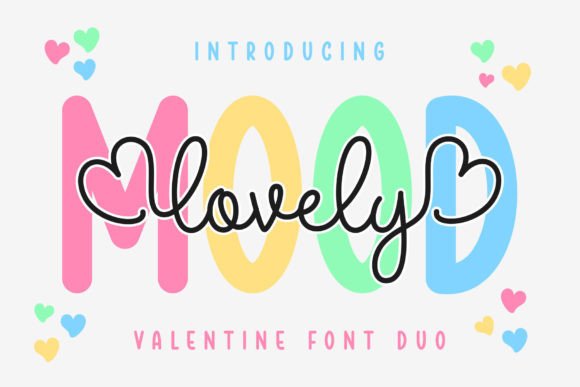
Imagine designing a hand-lettered wedding invitation, crafting a heartfelt Valentine’s Day card, or launching a small-batch candle brand with soft, emotional appeal. In each case, the right typeface doesn’t just communicate—it evokes feeling. Lovely Mood Duo is built for exactly that: two complementary styles—a delicate script monoline and a clean sans display—designed together to balance warmth and clarity. It’s not just “cute” or “romantic” as an afterthought; those qualities are woven into its rhythm, spacing, and contrast.
What Makes Lovely Mood Duo Distinct?
Lovely Mood Duo isn’t a single font with variants—it’s a purpose-built pair. The script monoline flows with gentle curves and consistent stroke weight, ideal for names, quotes, or short emotional phrases. Its companion, the sans display, provides strong visual grounding: friendly but legible, rounded but not childish, modern but never cold. Both share subtle design harmonies—like matching terminal shapes and balanced x-heights—that make them feel like siblings, not strangers.
It’s PUA encoded, meaning all alternate glyphs, swashes, and ligatures appear in your font menu without needing special software or code. No digging through character maps or switching apps—just select, type, and refine. That simplicity matters whether you’re sketching ideas in Canva or fine-tuning kerning in Adobe Illustrator.
Why This Duo Fits Different Goals—Without Compromise
Not everyone needs the same thing from a font—and that’s where Lovely Mood Duo shines quietly. Its value shifts depending on who’s using it and why.
For Beginners and Hobbyists
If you're new to design—or just want to make something meaningful without technical overwhelm—Lovely Mood Duo lowers the barrier. You don’t need to master pairing fonts or adjusting tracking to get a polished look. The duo works out of the box: use the script for headings and the sans for body text, and you’ll land in a sweet spot between handmade charm and readable structure. Try it for DIY greeting cards, Instagram story quotes, or printable wall art—no training required.
For Educators and Content Creators
Teachers building classroom posters or educators designing digital learning modules often seek fonts that feel approachable yet professional. Lovely Mood Duo bridges that gap. The sans display remains highly legible at smaller sizes, while the script adds personality to titles or motivational phrases—without distracting from content. One middle-school art teacher used it for a “Kindness Campaign” bulletin board, pairing handwritten-style student quotes (in the script) with clear action steps (in the sans). Students noticed the warmth; administrators appreciated the consistency.
For Small Business Owners and Entrepreneurs
When your brand voice leans tender, thoughtful, or intentionally intimate—think botanical skincare, heirloom stationery, or mindful wellness services—typography becomes part of your brand’s emotional signature. Lovely Mood Duo supports that without leaning into cliché. Unlike overly ornate scripts that fade in print or blur on screens, its monoline script holds up across formats. A ceramicist used it across her packaging, website headers, and email newsletters—keeping tone unified without sacrificing versatility.
For Design Professionals and Freelancers
Experienced designers often evaluate fonts by flexibility—not just aesthetics. Lovely Mood Duo offers reliable hierarchy, responsive behavior (it scales well from mobile banners to large-format prints), and stylistic cohesion. Its PUA encoding saves time during client revisions: swapping a standard “a” for a swash version takes seconds, not minutes. One branding designer noted how smoothly it integrated into a rebrand for a boutique flower shop—replacing three separate fonts with one intentional pair, cutting file bloat and speeding up mockup iterations.
Practical Use Cases Across Mediums
- Digital marketing: Email subject lines in the script, preview text in the sans—increasing open rates with visual warmth and scannability.
- Print design: Wedding programs where the script sets the mood and the sans ensures guest names and times stay crisp—even at 10pt.
- Social content: Reels captions that feel personal, not generic—especially effective for creators sharing stories about love, self-care, or slow living.
- Educational materials: Illustrated vocabulary posters where the script highlights target words and the sans explains definitions clearly.
What to Consider Before Choosing
Lovely Mood Duo excels when romantic, gentle, or affectionate tone matters—but it’s not built for high-contrast headlines, tech dashboards, or dense legal text. Ask yourself:
- Does my project benefit from emotional resonance over stark neutrality?
- Do I need both expressive flair and functional readability in one package?
- Will this be used across multiple formats—digital, print, embroidery, or signage—where consistency matters?
If yes, it’s likely a strong fit. If your work demands bold authority, strict accessibility compliance above all else, or ultra-narrow typographic constraints (like tight UI buttons), other options may serve better.
A Tool That Grows With You
One quiet strength of Lovely Mood Duo is how it adapts as your skills deepen. A beginner might start with basic layering in Canva. As confidence grows, they might explore OpenType features in Affinity Designer or tweak letter-spacing manually in Figma. Later, they could combine it with custom illustrations or motion graphics—knowing the typeface won’t compete, but complement. That longevity makes it more than a seasonal choice; it becomes part of a personal toolkit.
It also invites playfulness without penalty. Swashes aren’t hidden behind layers of menus—they’re accessible, intuitive, and designed to enhance, not overwhelm. That encourages experimentation, especially for those still building design intuition.
Ultimately, Lovely Mood Duo isn’t about perfection—it’s about intention. Whether you’re typing a love note, launching a business, or guiding students toward empathy, the right typeface can quietly reinforce what you’re trying to say. And sometimes, that gentle reinforcement is exactly what makes the difference.